
The Future of Events
What CVENT Connect 2026 Taught Me About The Future of Events
There's something special about walking into a room with nearly 5,000 people who share the same passion.
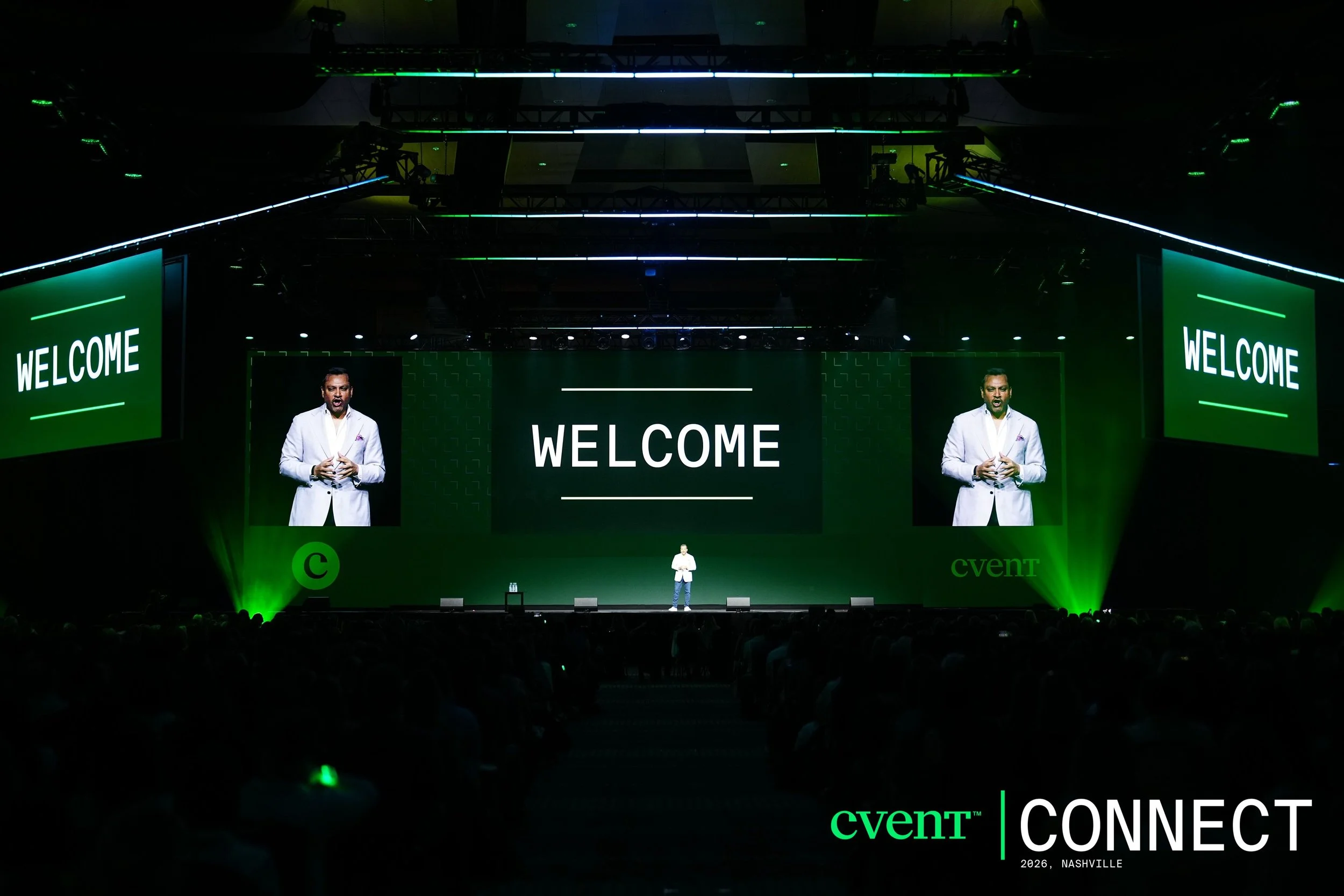
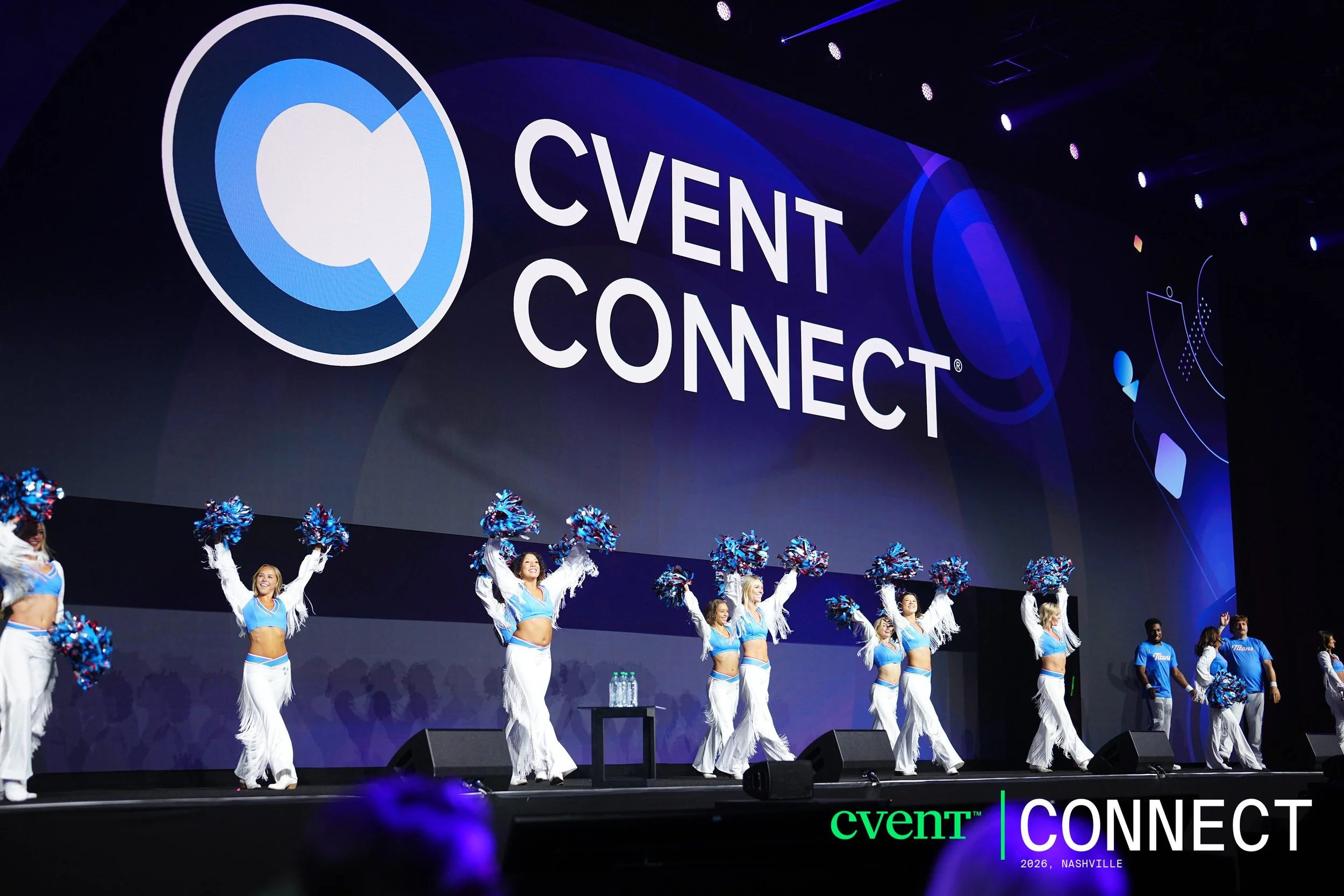
As the lights dimmed inside Nashville’s Music City Center, the bass echoed through the hall, LED towers illuminated the stage, and the Tennessee Titans Cheer Team welcomed thousands of event professionals to CVENT Connect 2026. The energy was electric. You could feel it before the first speaker even stepped on stage.
As someone attending for the first time, I expected to leave with a notebook full of product updates and a handful of new CVENT tricks. I left with something much more valuable.
Over three days, one message surfaced again and again: the future of event planning isn't about technology replacing people. It's about using technology to create more intentional, measurable, and memorable human experiences.
Here are the top four lessons I will carry with me from the conference.
Presence Has Become a Premium
Lesson One
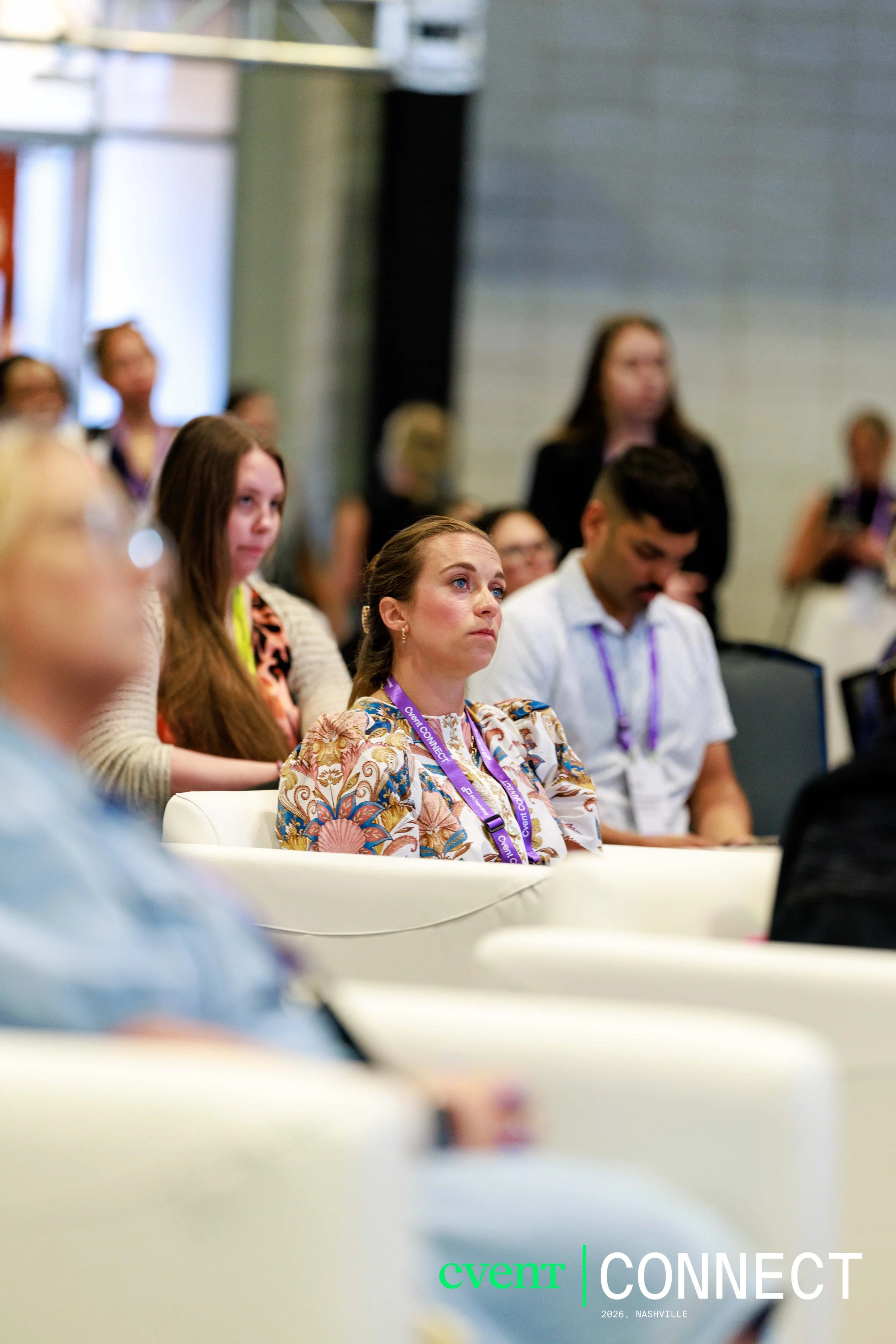
There is no substitute for showing up.
One of the most memorable moments of the conference wasn't a keynote or breakout session, it was the surprise rebranding.
While more than 5,000 attendees sat inside the Keynote listening to CEO Reggie Aggarwal unveil Cvent's next chapter, teams quietly transformed the entire conference experience outside the ballroom. Registration counters, LED towers, signage, digital displays, window clings, everything was rebranded before attendees walked back into the hallway.
As an event producer, I couldn't help but smile.
Not because of the rebrand itself, which is stunning, but because I understood the amount of planning, communication, logistics, and trust required to execute something of that scale without anyone noticing.
Experiences like that can't be replicated through a livestream or webinar. They're built through shared moments, thoughtful execution, and a room full of people experiencing something together in real time.
For organizations investing in conferences, executive meetings, and client events, that's the real value proposition. People may remember the slides, but they'll never forget how an experience made them feel.
Great Event Planners Think Like Business Leaders
Lesson Two
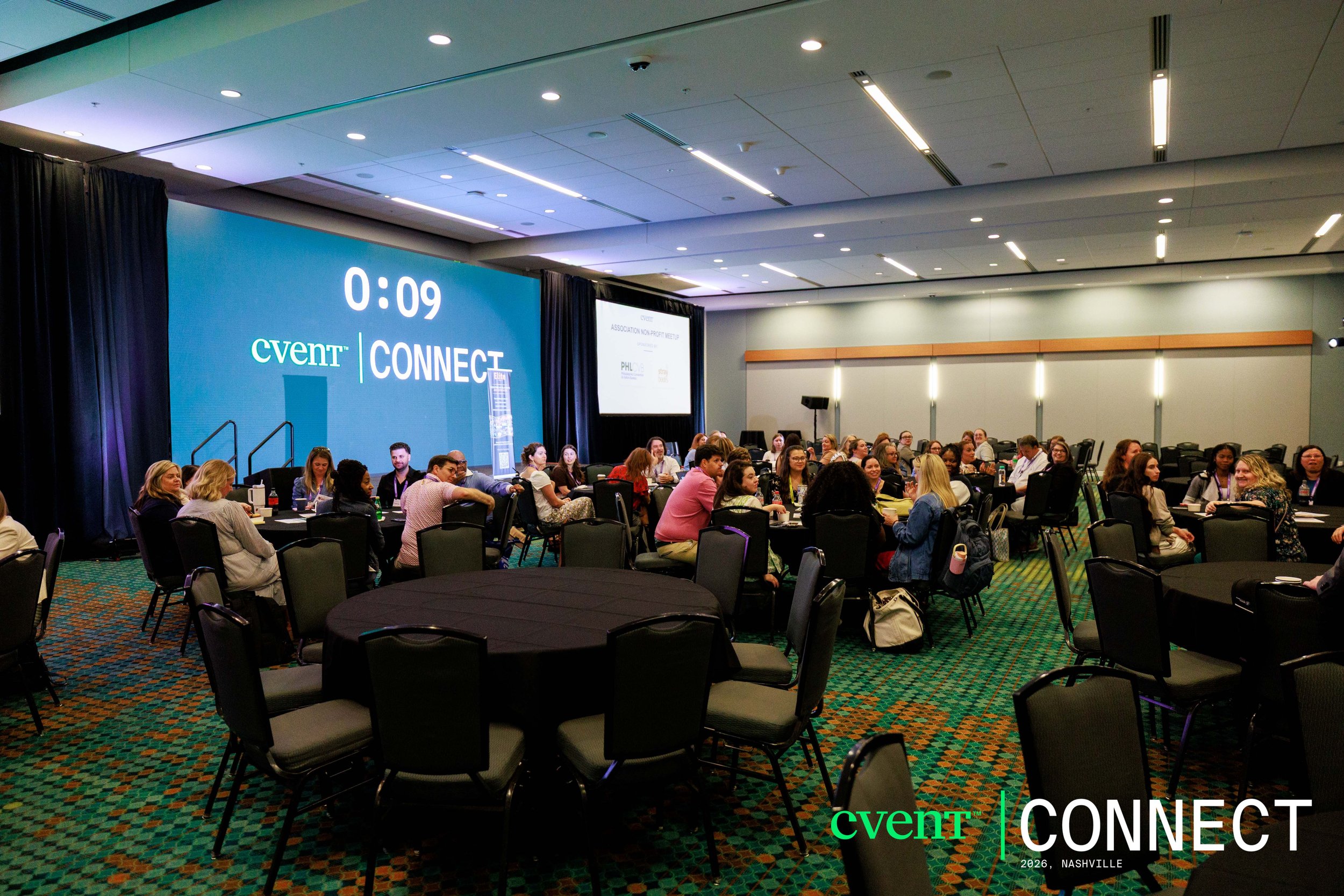
One of the most thought-provoking sessions featured leaders from CEMA, OneStream, and Forrester discussing what it means to adopt a commercial mindset.
For years, our industry has measured success through registration numbers, attendance, or post-event survey scores. While those metrics still matter, today's executive teams are asking a different question:
How did this event move the business forward?
One takeaway that immediately found a permanent place in my notebook came from Forrester's Tavar James, who encouraged planners to build a "chest of metrics."
Instead of walking into every executive meeting with the same dashboard, tailor your story to the audience in front of you.
A CFO may care about cost efficiency and return on investment while a Chief Marketing Officer may want pipeline influence and brand reach.
The most successful planners aren't just fluent in logistics, they're fluent in business strategy. That shift in thinking transforms event planning from a support function into a strategic business partner.
AI Should Save Your Time, Not Replace Your Thinking
Lesson Three
Not surprisingly, AI dominated many of this year's educational sessions.
What surprised me wasn't the excitement surrounding AI, it was the consistent reminder that AI is only as effective as the person directing it.
Ashley Phelps and Jordan Sanford shared one of my favorite pieces of advice from the week: don't ask AI to do your thinking, give it the information, insight, and perspective to make your work better.
The best prompts include context, objectives, brand voice, audience, and constraints. AI can help summarize notes, draft agendas, brainstorm ideas, or organize information.
But strategy?
Critical thinking?
Experience?
Those still belong to us.
One phrase from my sessions stood out:
Outsource the task. Don't outsource the learning.
Curiosity Is One of the Greatest Skills a Planner Can Have
Lesson Four
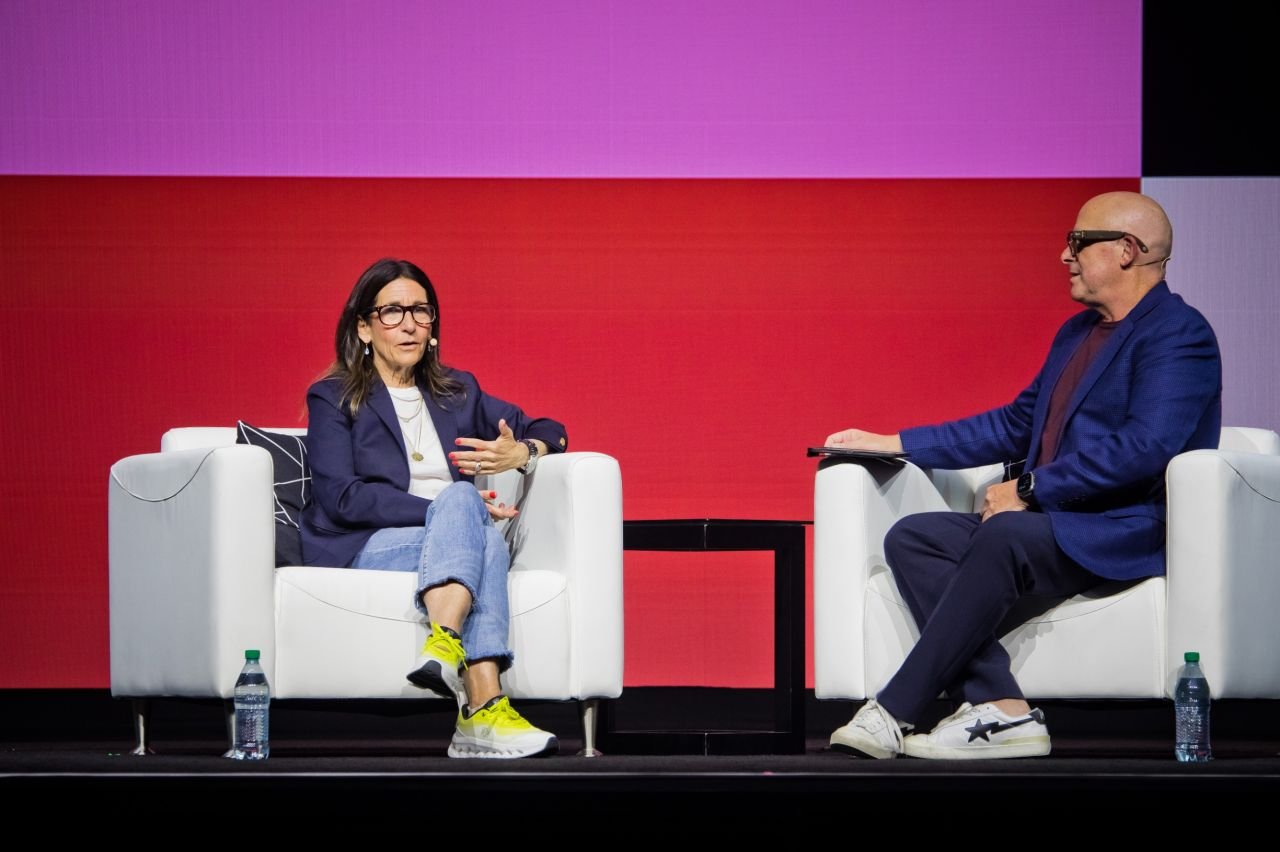
The conference concluded with a fireside chat between makeup mogul Bobbi Brown and renowned emcee Mark Jeffries.
Their discussion was candid and while it wasn’t directly about event planning, it may have delivered the lesson that resonated with me most.
Bobbi spoke openly about resilience, taking risks before feeling completely ready, maintaining empathy, and staying endlessly curious about other people.
She shared that she simply finds people interesting.
It sounds almost obvious, but in a world driven by social media, bombarded with constant distractions, genuine curiosity has become surprisingly rare.
As planners, curiosity is one of our greatest assets. It's what helps us understand our clients. It's what allows us to anticipate needs before they're spoken and transforms an ordinary agenda into an unforgettable experience.
The best events begin with a simple question: "How can we make people feel?"
While a number of her comments made their way into my AI snapshots (a new tool in the CVENT app, shoutout roadmap rollouts), only a few stood out above the rest:
“I’m not fearless. I’m just not afraid of what’s going to happen, and if you don’t do it, it won’t happen.”
“Be resilient and try things, don’t be worried that something’s not going to work out, and if it doesn’t oh well let’s do it differently”
Her session was a life lesson in putting the device down and engaging with the world around you because you never know who you may meet.
My Closing Thoughts
I came to CVENT Connect expecting to gain a deeper understanding of a technical software I rarely use. I left reminded of why I fell in love with this industry in the first place.
Yes, event technology continues to evolve at an incredible pace. AI will change how we work. Data will become more sophisticated. Platforms will continue to innovate. But the heart of our profession hasn't changed.
People gather to celebrate milestones, solve problems, build relationships, exchange ideas, and move business forward. Our job as planners is to remove friction, anticipate every detail, and create the conditions where those moments can happen effortlessly.
For me, CVENT Connect wasn't just another conference. It was confirmation that I'm exactly where I'm supposed to be.
It reignited my passion for event production and reaffirmed why I launched The CC Appetite, to partner with organizations that believe exceptional meetings don't happen by chance. They're thoughtfully designed, strategically executed, and remembered long after the last attendee walks out the door.
If there's one thing I'll carry forward from this week, it's this:
The future of events isn't less human.It's more intentional than ever.
Written By: Camille Carlin
Photography Credit: CVENT Connect 2026